
GLOBAL OUTREACH
South Africa
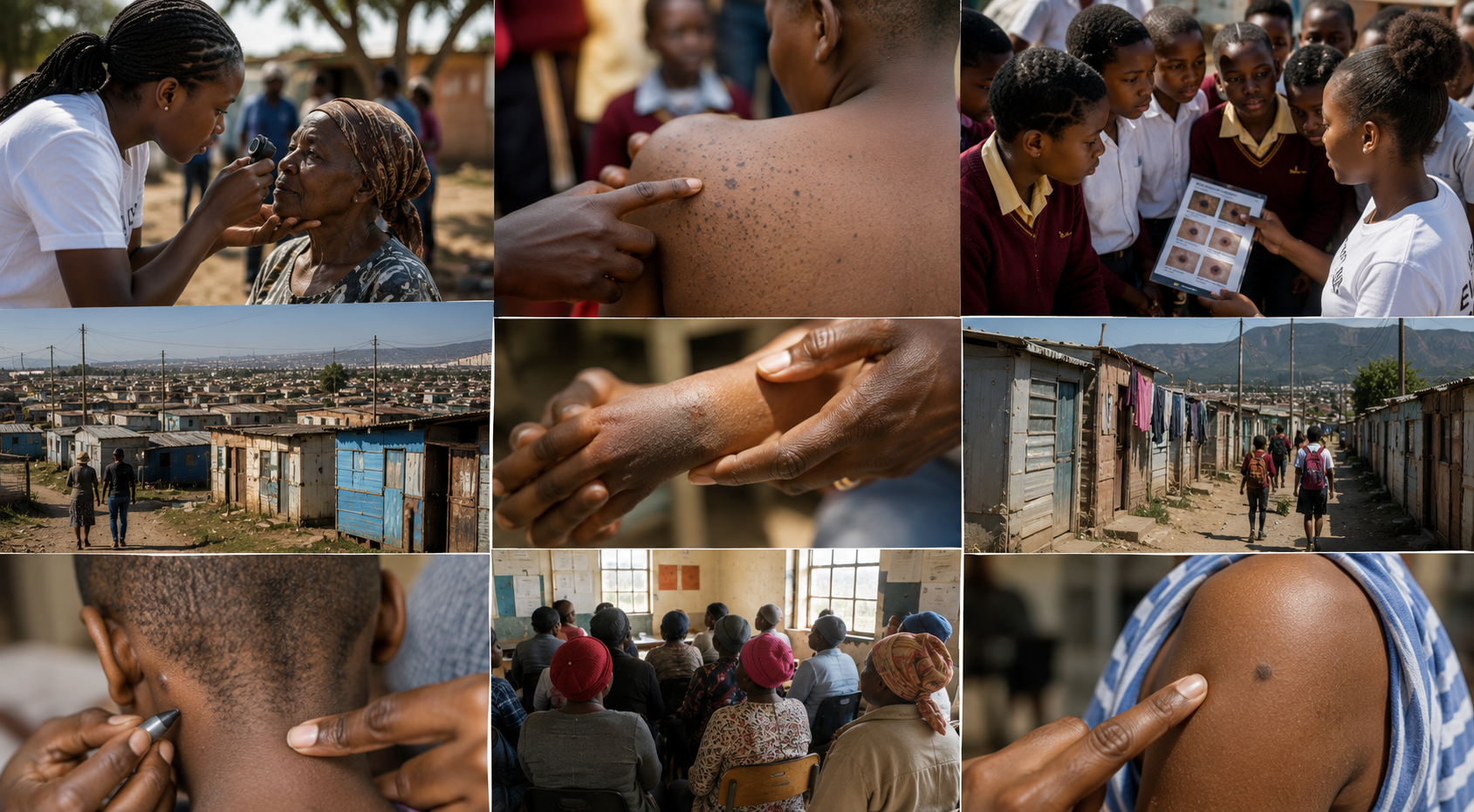
South Africa experiences some of the world's highest levels of ultraviolet (UV) radiation, with summer UV Index values regularly reaching 11+—the World Health Organization's highest "Extreme" category. Government monitoring has shown that peak UV levels across much of the country fall within this extreme range during the summer months, meaning unprotected skin can be damaged in just minutes. Despite this, many underserved communities have limited access to skin cancer education, prevention resources, and early detection services.
While melanoma is less common in Black South Africans than in White South Africans, it is more likely to be diagnosed at an advanced stage, when treatment is more difficult and outcomes are poorer. Misconceptions that darker skin is immune to skin cancer, combined with limited access to dermatology care and public awareness, contribute to delayed diagnosis.
Every Skin Counts is partnering with township communities, schools, healthcare providers, and local organizations to close this gap through culturally relevant education, UV awareness, sun protection initiatives, and early detection programs. By bringing lifesaving skin health information directly into communities, we're working to ensure that every South African—regardless of skin tone or where they live—has the knowledge, resources, and opportunity to protect their skin and detect skin cancer early.
Bringing Skin Health Where It's Needed Most
In many South African townships, access to dermatology care and skin cancer education is limited. Every Skin Counts partners with local organizations, healthcare providers, and community leaders to deliver free education, sun protection, and early detection resources directly to the communities that need them most.
Our goal is simple: prevent skin cancer before it starts and find it earlier when it's most treatable.
Township Initiatives
SOUTH AFRICA
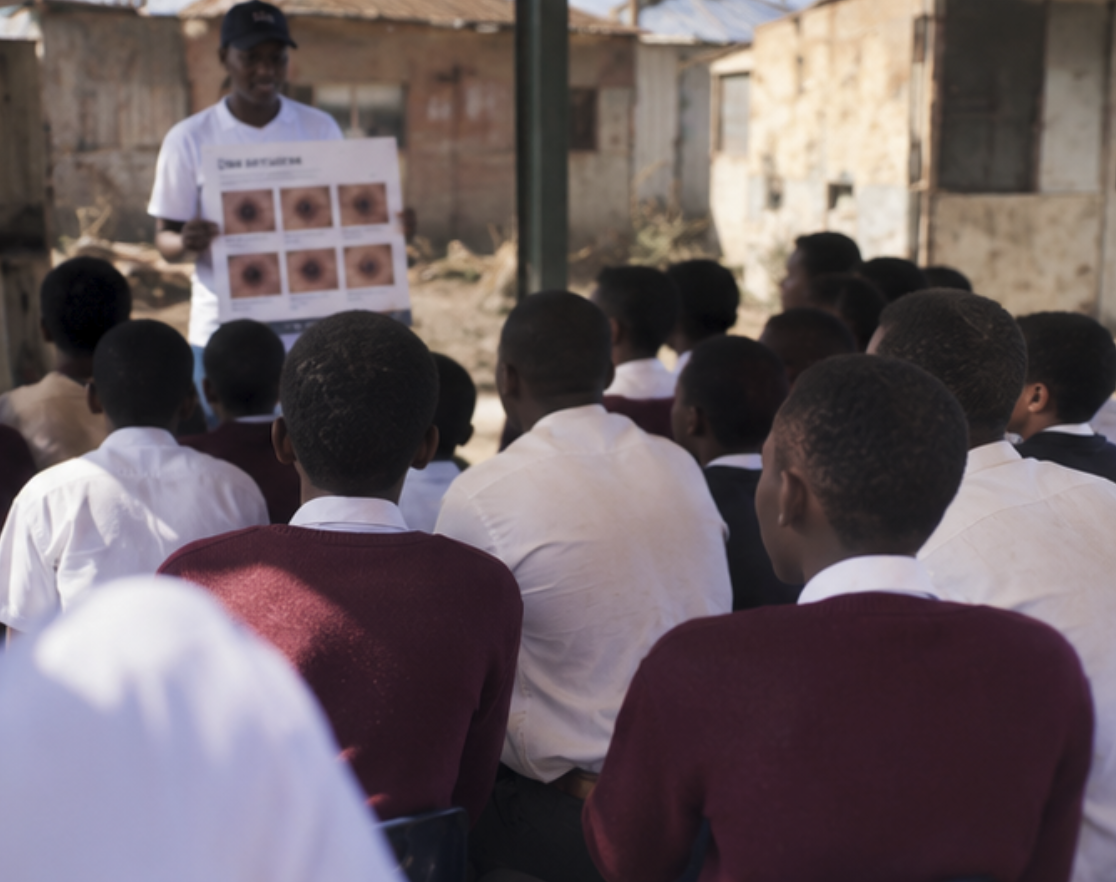
Community Education
Free educational sessions covering:
Skin cancer warning signs
How to perform a skin self-check
When to see a healthcare professional
Multilingual Programming
SOUTH AFRICA
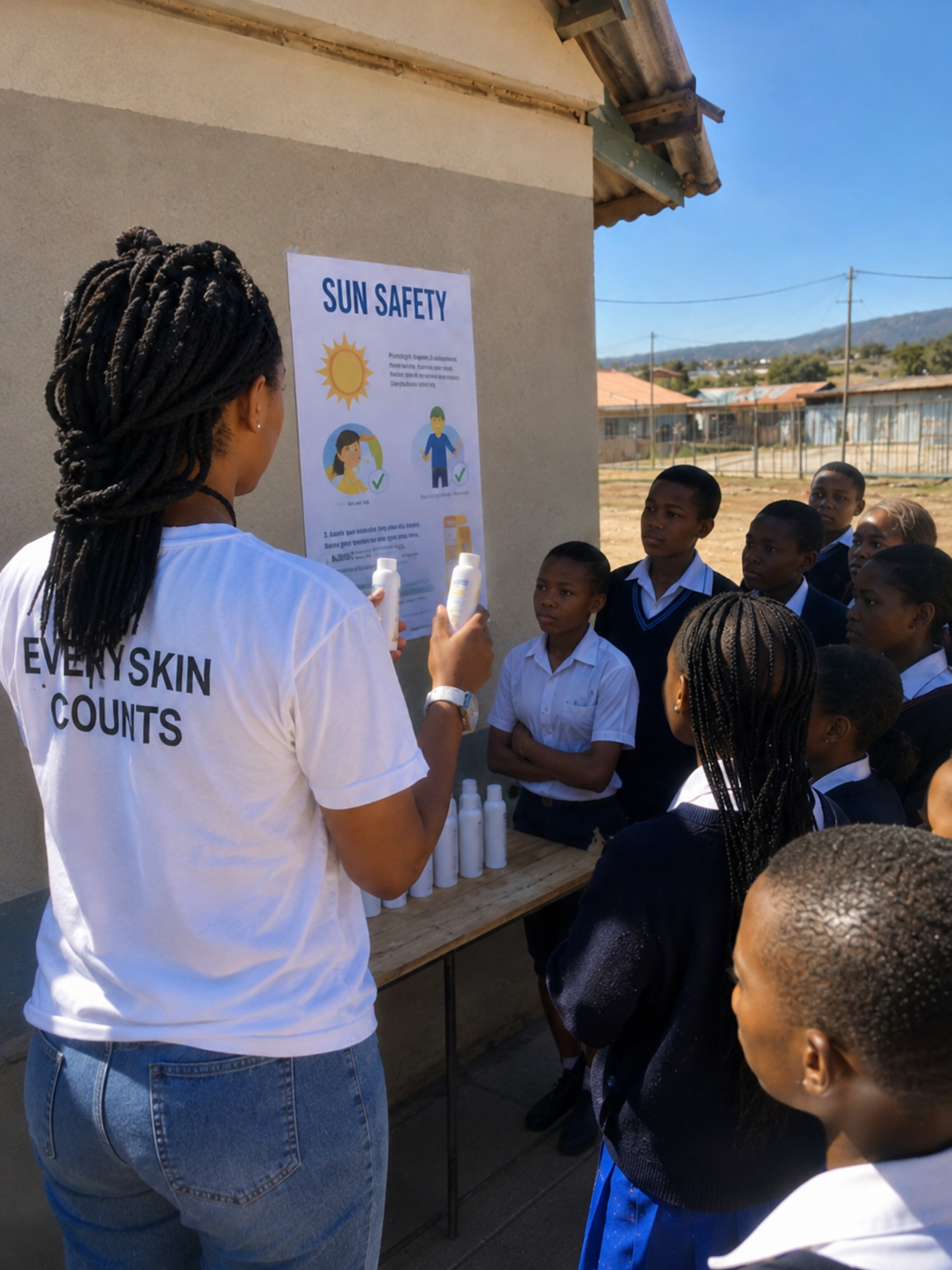
School Sun Safety Program
Teaching children:
Safe habits in the sun
How UV affects the skin
Healthy outdoor behaviors
Students receive educational materials available in several native languages to share with their families.
SOUTH AFRICA
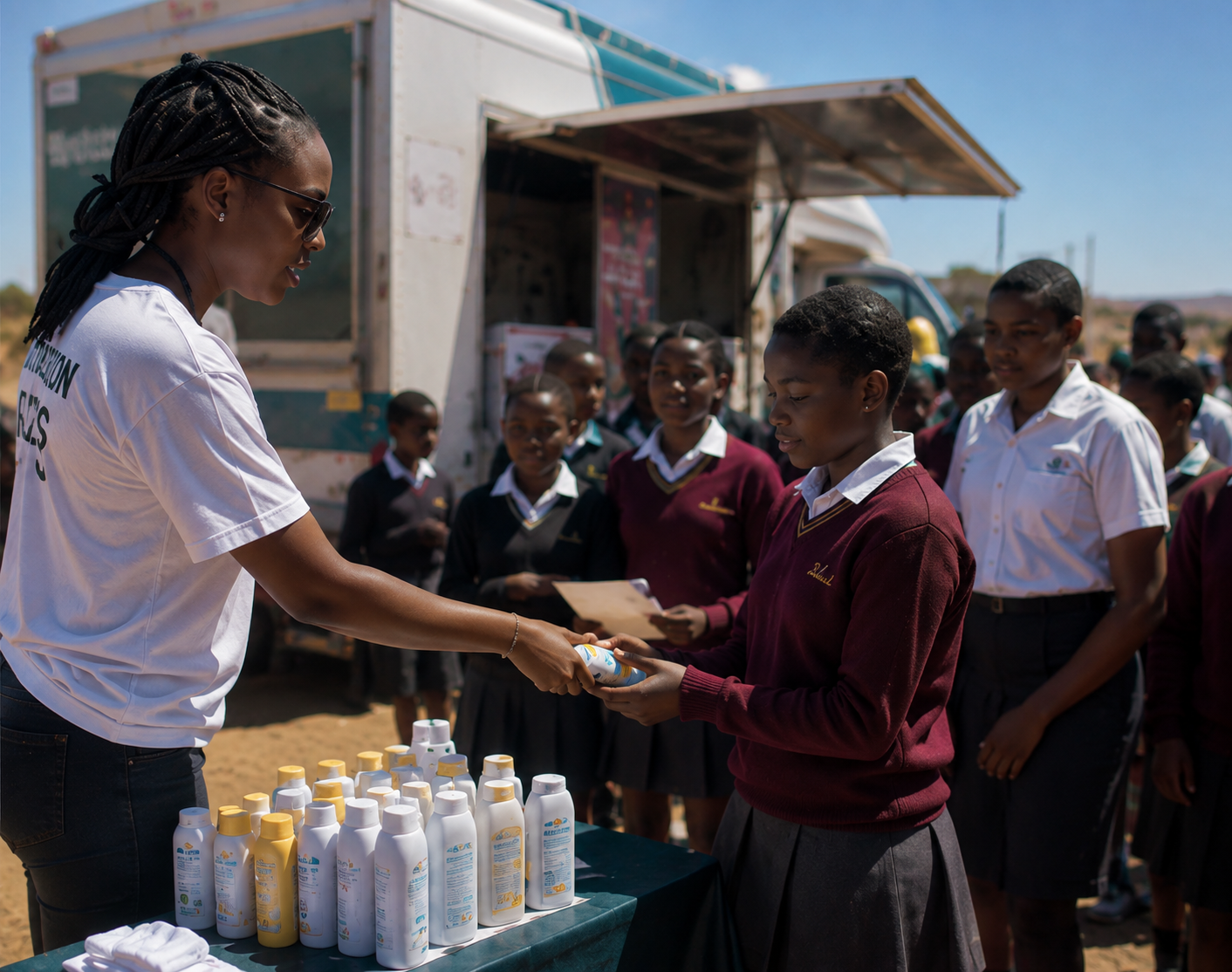
Free Suncream Distribution
Providing suncream to:
Schools
Community centers
Outdoor workers
Youth sports programs
Local events
Our Goals
Although skin cancer is less common in Black Africans than in people with lighter skin, it is often diagnosed at a later stage, making it more difficult to treat. A common misconception is that darker skin cannot develop skin cancer, but no skin tone is immune.
Melanin provides some natural protection against ultraviolet (UV) radiation, but it does not eliminate the risk of skin cancer. In Black South Africans, melanoma is more likely to develop on the palms of the hands, soles of the feet, and beneath the nails—areas that receive little sun and are often overlooked during routine skin checks. This type, called acral lentiginous melanoma, is frequently diagnosed later because it can be mistaken for a bruise, wart, or other harmless skin condition.
Barriers such as limited access to dermatology services, lower awareness of skin cancer in darker skin tones, and fewer public health campaigns focused on these communities can further delay diagnosis.
Every Skin Counts is committed to changing that by providing education that reflects every skin tone, increasing awareness of the warning signs of skin cancer, and expanding access to early detection in underserved communities.
Why Townships?
Why Does This Matter?
Millions of South Africans live in townships, where access to specialist healthcare is often limited.
Outdoor work and daily sun exposure increase UV exposure for many residents.
Skin cancer is highly treatable when detected early, making education and awareness critical.
Everyone is at risk. While melanoma is less common in people with darker skin, it is often diagnosed at a later stage, leading to poorer outcomes.
Simple prevention saves lives. Knowing the daily UV Index, recognizing warning signs, and using basic sun protection can make a significant difference.
Key Facts
People of every skin tone can develop skin cancer.
Melanoma in darker skin is more likely to be diagnosed at a later stage, when treatment is more challenging.
Acral lentiginous melanoma—which often appears on the palms, soles, or under the nails—is the most common subtype of melanoma in darker skin tones.
Early detection saves lives, regardless of skin color.